
Trace Former Greenbrier Owners
Working backward means starting with the most recent deed and stepping to the one before it. Each instrument names a grantor and a grantee. Together they form the chain. Enter dates, parties, book/page and the legal description from the actual Clerk copy into the timeline worksheet, which is a working table for the Greenbrier chain rather than a list of invented transactions.
| Transfer Point | Transfer Date and Parties | Instrument | Greenbrier Reference |
|---|---|---|---|
| Latest recorded transfer | Read the instrument date and current grantee / grantor. | Deed named by the assessor reference. | Book/page shown on the parcel card. |
| Earlier conveyance | Use the prior grantor and grantee from that deed. | Earlier deed or referenced instrument. | Book/page or document locator in the Clerk index. |
| Older book entry | Copy dates and parties from each original entry. | Historic deed book or grant reference. | Ask the Clerk or archive to verify the volume. |
The current parcel card and the recorded deed form the first link. The online inquiry may miss the period you need. The County Clerk's public computers and deed books are the next step. Historical Society material can explain an older name or neighborhood. But no obituary or directory replaces the deed itself.
Greenbrier’s Unknown Online Cutoff
The Greenbrier County Clerk runs an Online Deed Inquiry system and four public computer stations. The earliest online index year is not stated. No imaging cutover appears either. Assume nothing about a cutoff date. Search the online index first. If an older former owner does not surface, call the Clerk at 304-647-6602 and ask which grantor and grantee books cover the period. The counter is a trusted fallback rather than a last resort.
Live result fields, image fees and full scanning coverage are not published either. Keep three details handy. They are the deed book/page reference, the legal description and the party names. That preparation speeds any lookup. The Greenbrier County Fees & Records page links the online database and posts the ordinary copy charges. The Clerk page supplies office details.
The Greenbrier County Fees & Records page posts the schedule.
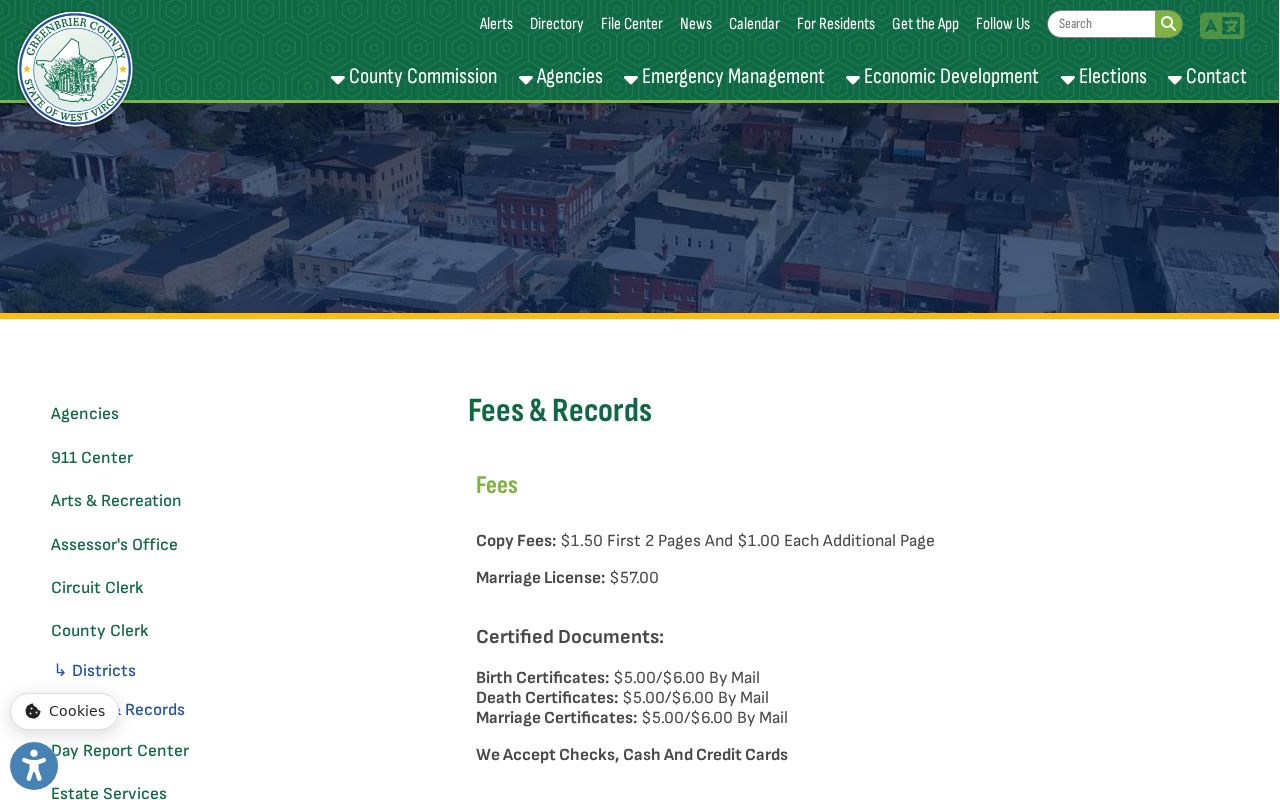
The fees page is a signpost, not a complete answer. Confirm online years and image availability with the Clerk before deciding that an older deed is missing.
Walk Back the Greenbrier Deed Chain
Each former owner becomes a search key for the next deed in the Greenbrier chain. Names alone are not enough. The land description matters too. An older deed may cite a stream, a road, an acreage figure or an adjoining owner rather than a current 911 address. Track each parcel and reference in a chain table. Never merge two same-name people until the legal description and dates align.
Read the Greenbrier Chain Backward
Start with the current grantee and hunt down that party's acquisition deed. The grantor named there is your next earlier owner. Search that grantor as a grantee. Repeat the process, checking both sides of every transfer. This backward reading reconstructs the former owners of a parcel without mixing the history of a person with the history of the land.
- Find the assessor’s current owner and deed book/page for the parcel.
- Read the cited deed, including grantor, grantee and full legal description.
- Search the grantor as an earlier grantee and compare the land description.
- Follow each prior deed reference and test name variants in both index directions.
- When the online trail ends, continue through courthouse deed books or an archive.
- Grantor
- The party conveying an interest in the recorded deed.
- Grantee
- The party receiving the interest in that instrument.
- Chain of title
- The sequence of linked recorded transfers for the same land.
- Legal description
- The land identity used to connect older deeds when an address changes.
- Reverse search
- Search a prior grantor as an earlier grantee to move back in time.
Greenbrier Deed Books Begin Early
Greenbrier County formed in March 1778. It was carved from Virginia's Montgomery and Botetourt counties, so its record history spans early Virginia-era grants and later county deed books. The early holdings run deep. A catalog lead lists deeds from 1750–52, 1754, 1769 and 1783–84, deed books 1–5 from 1780–1814, and Will Book 1 spanning 1777–1833. Confirm exact holdings and call numbers with the Clerk or the Historical Society. These dates do not mean the documents are online.
The Greenbrier Historical Society describes its archive as holding courthouse documents, marriage bonds, family histories, newspapers, obituaries, directories and rare material. That collection adds context. It shines once the deed trail itself has been followed, and the archive page is the source for appointment and access details.
See the Historical Society archive page before an older-record visit.

Appointments are required, with at least 24 hours' notice. Staff also decide whether copies or scans can be provided.
Greenbrier Estate Transfers
A death creates records beyond the deed. Greenbrier's Estate Services office requires an in-person appointment with photo ID. An exception applies when an attorney represents the applicant. Its checklist can run long, with items like the original or emergency working death certificate, the original will or a surety bond, an heir list, estimated personal assets and ID. The opening fee is assessed at the appointment, with an approximate range of $75–$275. Estate papers establish who may act for an estate. They do not themselves substitute for a recorded deed to the parcel.
State Vital Registration provides certified birth, death and marriage records. Each copy costs $12, with eligibility and ID rules attached. Birth records stay confidential until 100 years. Death records open after 50 years. A county certificate can carry a different fee and purpose, so confirm the right custodian before ordering.
Visit West Virginia Vital Registration for current certified-copy instructions.

A vital record can support family research, while the probate file and the deed together establish the property transfer trail.
Greenbrier Names and Legal Descriptions
Names shift in older Greenbrier County records. A grantor may appear under initials, a spelling variant, a maiden name, or a spouse. Estates, trusts, and LLCs file under their own styles. Run every name in both the grantor and grantee directions before drawing conclusions. Then test the match against the parcel's legal description. That may mean lot and block, acreage, or metes and bounds. This matters most in the older land books. There, a modern street name or route number may simply not exist.
Parcel numbers are not permanent. A split or a merge can assign a new tax parcel ID. The land itself stays put, so record the current parcel and any previous reference named in a deed. A recorded subdivision plat ties a town lot to later lot and block descriptions. A rural deed may still call a creek, a ridge, or a road. It may name an adjoining owner as the boundary. The GIS map helps you locate the tract. The legal description still anchors the chain of title.
How Far Back Greenbrier Records Reach
Greenbrier County's paper trail runs deep. Virginia-era land papers survive alongside deed books from the county's earliest years. The Clerk's online index states no starting year. The oldest digitized volume is a question for staff rather than the public page. No fire or records loss marks Greenbrier's courthouse history. A missing online image is never proof a deed was destroyed. Ask for the older grantor and grantee index. Confirm each book's physical location with the County Clerk, the Historical Society, or the catalog source.
Catalog leads add detail. Deed books 1 through 5 cover 1780 to 1814. Will Book 1 spans 1777 to 1833. Earlier deed leads carry dates of 1750 through 1752, 1754, 1769, and 1783 through 1784. Those dates are leads, not proof. A volume may sit under a different catalog label today. It may not be digitized at all. Verify the call number with the Clerk or the Greenbrier Historical Society before planning an in-person search.
Four public computers at the County Clerk's office offer another route. Use them when an index entry or image will not load from home. Copies carry a posted fee. The schedule is $1.50 for the first two pages. It is $1 for each page after that. Broad name searches can stumble. An older spelling or a deed filed under an estate can slip past a simple query. Bring the parcel description and alternate party names when asking staff for help.
Research limit. The Greenbrier online deed cutoff is not published; older books and archive holdings are the next route. Use former-owner records for house history, a title review or property diligence, never to track or harass a living person.