
Find Who Owns Greenbrier Property
Start from the land, not the name. The Greenbrier Assessor search lets you query by address, owner, or parcel ID. When an address pulls up a card, note the parcel number. Write down the legal description too. Then carry the owner name and deed book/page to the County Clerk's land records. That order keeps a rural tract tied to its own legal description. It also helps you dodge same-name errors. Multiple names on the card? The newest deed shows how the interest passed.
- Enter the location or a known owner in the WV Assessment search.
- Open the parcel and copy its owner field, parcel ID, mailing address and legal description.
- Take the deed book/page to the County Clerk’s Online Deed Inquiry or courthouse computer.
- Read the latest instrument’s grantor, grantee and legal description, then compare the parcel.
- Ask the Clerk for a counter lookup when the online deed entry does not appear.
Carry the same parcel reference through every step. Old addresses and company-owned land make the ID and legal description far steadier than a quick name match.
- Owner of record
- The person or entity named on the assessment roll or recorded deed.
- Grantee
- The party receiving an interest in a deed.
- Title
- The legal interest shown through review of relevant instruments and claims.
- Situs and mailing address
- The land location and correspondence address may differ.
Greenbrier Ownership Record Sources
Ownership clues in Greenbrier sit in three layers. The Assessor links a name and parcel to the current tax roll. The Clerk records each deed that moves an interest. The WV Property Viewer plots the parcel and shows an owner field. Its notice warns that only one owner may display even when several exist. So use the Assessor to find the parcel. Use the Clerk for the recorded conveyance. Use the viewer for map context.
Greenbrier Owner Record Sources
Each record answers a different question. The assessor result is a tax-roll snapshot. The Clerk's instrument is the transfer itself. The map is a location cross-check. A name visible in one source may not show in the others the same day.
| Source | Owner Info It Gives | Access |
|---|---|---|
| Assessor roll | Owner, parcel, legal description and deed book/page. | Annual valuation cycle; recent transfers may be newer. |
| County Clerk deed | Recorded grantor, grantee and legal description. | Reflects an instrument once recorded; online depth is unstated. |
| Secretary of State | Entity name, agent and public business filing. | Online search; exact dynamic field list not exposed. |
| WV Property Viewer | Parcel map and one displayed owner field. | Useful cross-check; may omit co-owners. |
An owner of record and a person living at the address are two different things. The Greenbrier roll attaches a name to the account. It does not attach it to whoever is inside the house. The mailing address may sit somewhere else entirely. Read the deed before assuming you know the interest conveyed. A parcel card bridges the state interface and the Clerk's index. Copy the district, map, parcel, and suffix exactly as displayed, keeping leading zeros and punctuation. Then compare the legal description and neighborhood field. An owner search can return several accounts. Mailing and physical addresses help separate them. Only the recorded description proves the deed covers the same land. No address result? Try the road name. Or try the owner's legal name. Open candidates one at a time. A post-office city, a route name, or a business mailing address can cover many locations. Keep each parcel key separate until the book/page and land description match. Never merge neighboring lots just because one name appears on both. The West Virginia Assessment portal's parcel view shows the owner, legal description, and book/page detail. That detail is used for this cross-check. Visit the WV Assessment search to pull a Greenbrier card. The state result is an assessment record; the Clerk's deed remains the record of conveyance.
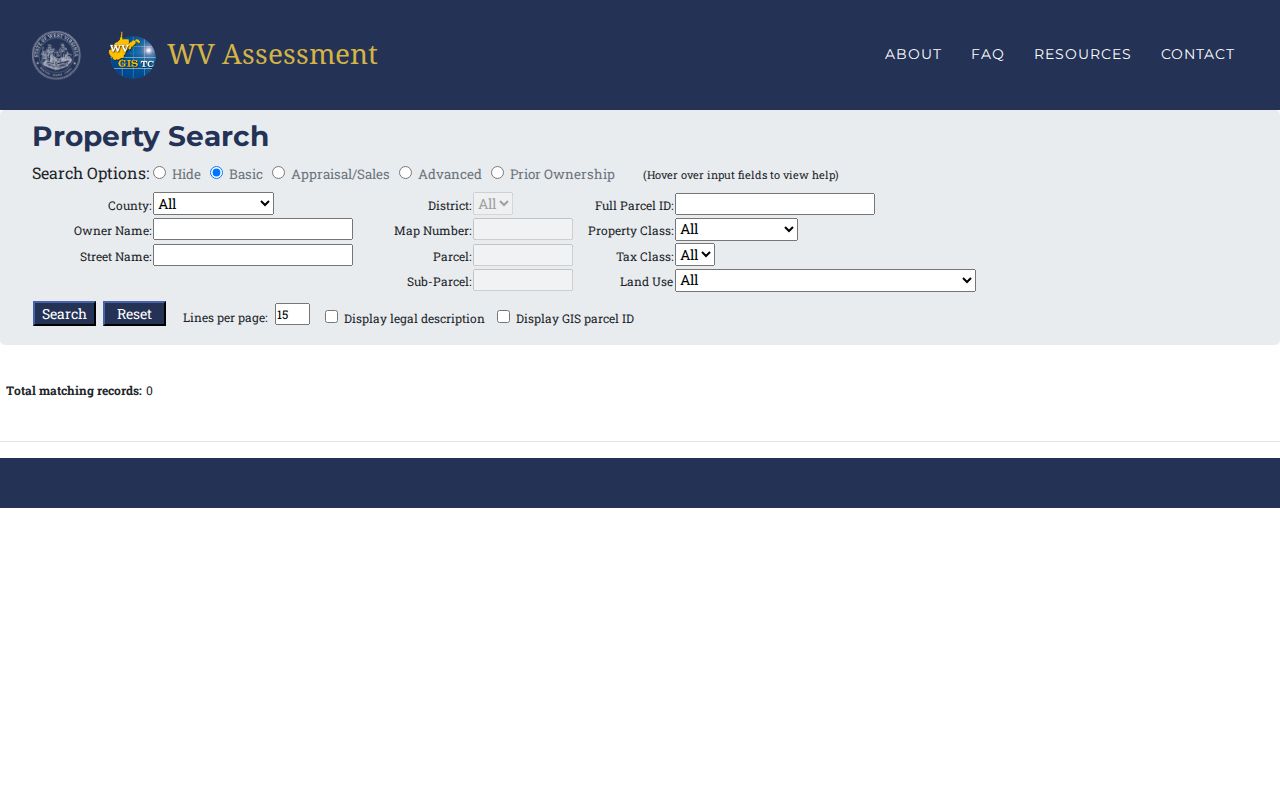
The card is only a lead for the deed lookup, and it may show one owner. Read the grantor and grantee wording in the recorded instrument to see the real interest.
Greenbrier Owner Names in the Roll
The West Virginia Assessment search accepts an owner name or an address. It returns parcel detail. A company can appear as grantee. A trust may be listed under the trust or trustee name. An estate transfer can name an executor or administrator. The manager of an LLC is not always the owner of record on the deed. When an entity is the grantee, run its exact legal name through the West Virginia Secretary of State Business Organization Search. Compare the public filing with the recorded instrument.
Matching surnames call for more than a name match. Stack the address, district, map and parcel, legal description, and deed book and page together. The owner's mailing address may sit outside Greenbrier County or point to an agent. It is not the parcel's physical location. The WV business search helps identify a filing entity. It cannot establish who owns that entity's underlying property.
The Assessment interface offers more fields than an owner-name box. Address, parcel ID, street, and district, map, parcel and suffix entries can narrow a result. Filters cover assessed value, acreage, sale information and structures. When a name query returns several Greenbrier parcels, use those account fields. The legal description can help pin down the land before opening a deed. Does each text field match exactly or partially? The public material does not say. Try a known parcel key if a spelling fails.
The Clerk's deed inquiry reads in both directions. An owner appears first as grantee on an acquisition. The same name may return later as grantor on a conveyance. Record the book and page, instrument date, and full description for each hit. Surnames alone prove little. An estate, trust, or co-owner may convey only the interest named in that document. A shared last name does not mean the entire parcel passed to one person. Unclear online entries deserve the custodian's recorded copy.
Greenbrier Deed Can Be Newer
The Assessor values property each July 1. The roll takes shape over the following months. A sale recorded after that snapshot can leave the older name on the assessment card until the next update. For a recent transfer, compare the card's deed reference against the County Clerk's latest recorded deed. Greenbrier's Online Deed Inquiry does not state its coverage or imaging cutoff. A counter or terminal search may be needed.
Property books are completed by January 30. Values are certified by March 3. Staff visit each property at least once every three years as part of the valuation work. Those dates do not promise an ownership-update interval after a deed is filed. Keep the assessment card's date beside the deed's recording reference so a later reader can tell which source is newer.
The map viewer may show only one owner. Several owners can hold a single parcel. Neither that display nor a homestead filing proves sole ownership. The current owner workflow reads the assessment owner field and then confirms a recent transfer against its recorded deed.
The County Clerk advertises Online Deed Inquiry. Four public computers in the courthouse support land-record research. Copies run $1.50 for the first two pages and $1 for each additional page. Ask whether a copy request can be handled remotely before sending payment. The public page skips online depth and imaging dates. A missing web result should be checked with the Clerk.
Greenbrier Privacy and Addresses
Privacy matters in ownership research. West Virginia runs an Address Confidentiality Program. It gives qualifying survivors a substitute address plus mail forwarding, arranged through a trained Application Assistant. Enrollment lasts four years. It stays active as long as the requirements are met. Many government transactions accept the substitute address. But the program does not erase every underlying property record tied to a person. The Secretary of State ACP page spells out who qualifies and how to apply.
A mailing address on a parcel is just that, a mailing address. It is for correspondence, not a clue to where someone actually lives. Tax rolls often list a different contact instead of the owner of record. That could be an agent, trustee, or estate representative. None of those roles proves who occupies the land. Nor does any of them prove who controls a company behind the deed. When the grantee is a business, cross-check the state business filing to understand the entity. Then rely on the recorded deed itself for the true property interest.
For broader context on substitute addresses and owner privacy, the Secretary of State ACP page describes how the program shields a participant's real address. Greenbrier County property records research can proceed while that protection stays in place.
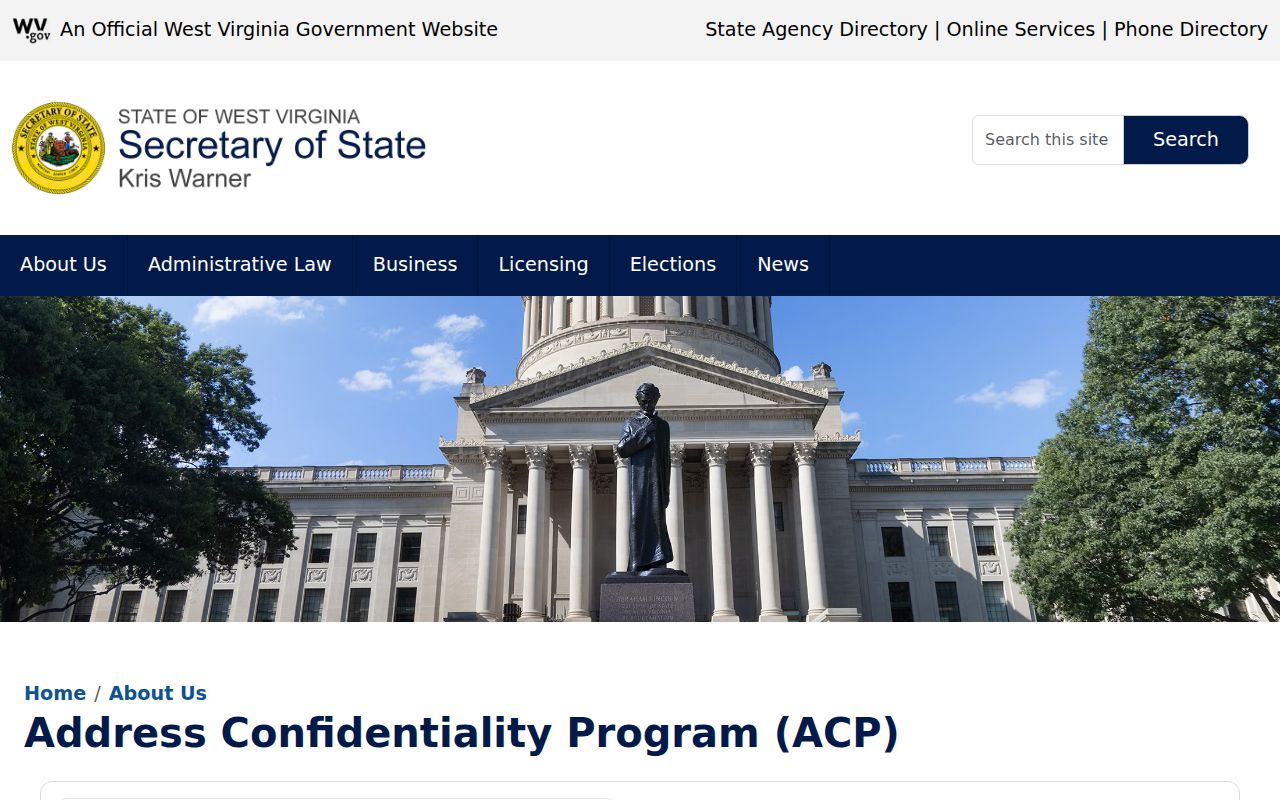
Use the program's approved substitute address wherever it appears in a record. Never try to infer protected details from other records.
What Greenbrier Owner Search Cannot Prove
A Greenbrier owner search reads the assessment roll. It identifies the name attached to a parcel. It can also point to a recorded deed. What it cannot do is prove the property is free of liens, undisclosed interests, later instruments, or co-owners. Entity names can mislead. An LLC, trust, life estate, or fiduciary transfer may put a name on the record that differs from the person a searcher expects. Read the deed, and for any transaction have title reviewed by a qualified professional.
Lawful use. Greenbrier owner records support property diligence and civic research. Never use owner details to stalk, intimidate or harm anyone.