
Greenbrier Deed Records by Instrument
A deed proves a conveyance, but Greenbrier County land records hold much more. The Clerk also records mortgages, releases, liens and plats. Read the record type first. One document may only secure a debt. The table lists useful deed-record categories drawn from the county's documented set, though the online search menu may use different labels.
| Deed Type | What It Does | Common Use |
|---|---|---|
| Conveyance deed | Records a transfer and its legal description. | Match the current owner to the parcel. |
| Executor or administrator deed | Can carry out a fiduciary estate transfer. | Connect probate authority with the recorded grantee. |
| Deed of trust or mortgage | Records a secured debt affecting the property. | Check whether a later release or satisfaction appears. |
| Release or satisfaction | Records discharge of a prior instrument or claim. | Match it to the original book/page reference. |
| Plat, easement or lis pendens | May set lot context, an access right or notice of a case. | Compare the recorded map or notice with the deed. |
Deeds and debt instruments do different work. A deed names the transferor, recipient and land. A mortgage or deed of trust instead records a security interest. Releases, judgments, liens and lis pendens can still affect a Greenbrier County title review without moving ownership. Match the deed to its parcel by legal description. Rely on the instrument itself, not the label on a search result.
Greenbrier Clerk Deed Index Access
Greenbrier County's Clerk promotes an Online Deed Inquiry from its official page. What the public description leaves out matters. Earliest year, image cutover, result limits and live search fields are not stated. Those gaps are real. Never infer a date range from the county's formation year. Try the online inquiry first. When a record does not appear, fall back on the courthouse counter. Public computers there offer another route. The Clerk sits at 912 Court Street North in Lewisburg. Office hours are weekdays, 8:00 a.m. to 4:30 p.m. Call 304-647-6602 before traveling for an older volume or archived instrument. The County Clerk page lists its recording duties and the Online Deed Inquiry link. The county Fees & Records page also links the online database. See the Greenbrier Fees & Records page for the current index link. It also posts the copy schedule.
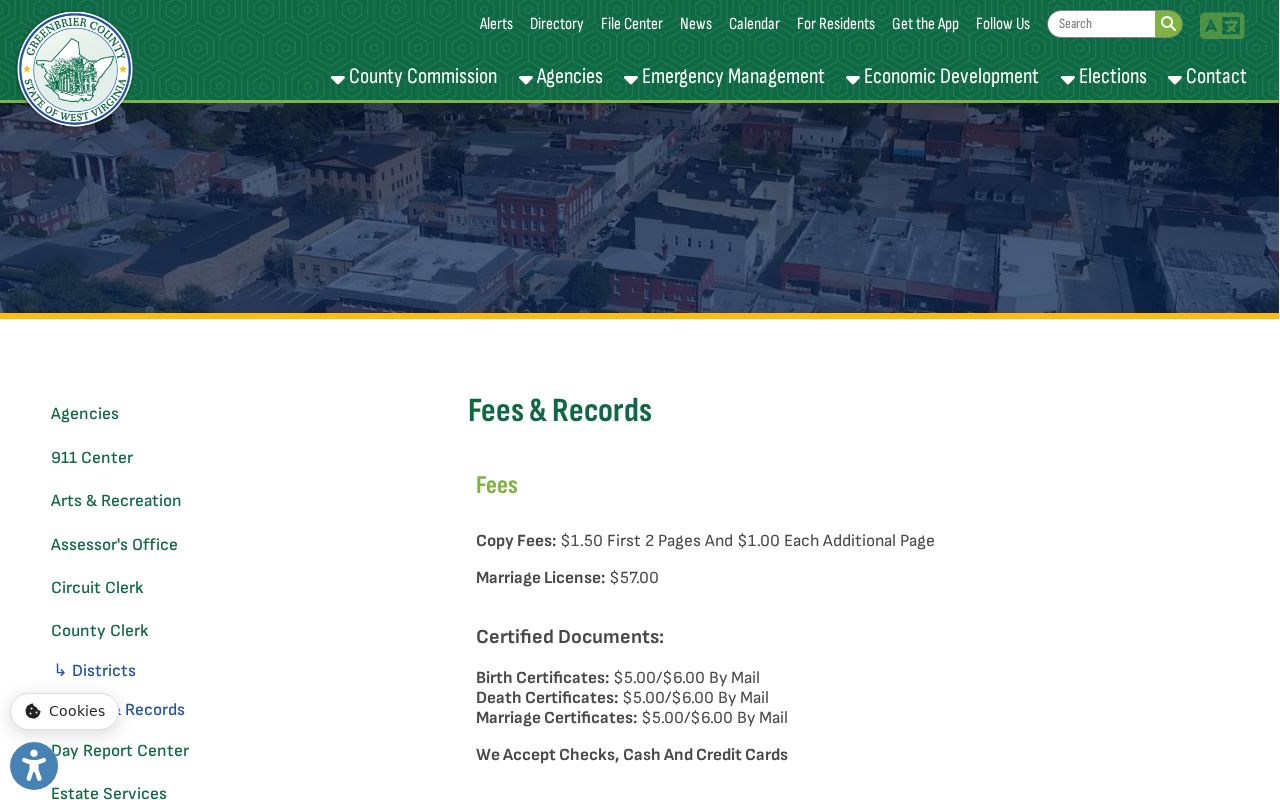
This public entry point helps a visitor find the clerk's recording service for deeds and parcel instruments. It does not prove that every historical deed image is available online.
Walk the Greenbrier Grantor Chain
Walk a Greenbrier County deed chain by linking each transfer's grantor to an earlier grantee. Start with the current assessor parcel and its deed reference. Read the instrument itself rather than copying a name. Common surnames attach to many Greenbrier parcels. So hold the tract steady with the legal description, district, map, parcel number and prior deed citations.
- Use the assessor card to identify the current grantee and legal description for the parcel.
- Open the cited deed and note every grantor, grantee, instrument type, recording date and prior reference.
- Search the grantor as an earlier grantee, then compare the legal description and parcel history.
- Repeat both name directions when spellings or punctuation differ; keep a written table of each transfer.
- When the online index ends or omits a record, ask the Clerk or archive for the older book and index.
- Grantor
- The party who conveys an interest in an instrument.
- Grantee
- The party named as receiving that interest.
- Chain of title
- The linked record of transfers for the same land.
- Book and page
- A volume-and-page locator used in the assessor’s deed reference.
Greenbrier Record Fields and Gaps
The Clerk's public material confirms a deed inquiry but shows no sample result with exact field labels. Write down the essentials from any deed. Party names and instrument type come first. Add the dates, book and page or document number, legal description, and any prior deed citation. The Assessor card exposes deed book/page and legal description. Those bridge fields carry a property search straight to the recorded deed.
| Party names | Read both grantor and grantee from the instrument; exact online role labels are not confirmed. |
|---|---|
| Recording placement | Use deed book/page where shown; retain any document number as well. |
| Dates | Distinguish the deed’s instrument date from the date the Clerk recorded it. |
| Legal description | Match lot/block, acreage or metes-and-bounds language to the subject parcel. |
| Image access | Online image availability is not verified; ask at the counter. |
The portal's exact labels and coverage are not published. A blank search is not proof of absence. Try alternate spellings or ask the Clerk for help before concluding no Greenbrier County deed exists.
Use the Greenbrier Party Index
Greenbrier County's title trail is searched by party name, then checked against the described land. A grantee index shows who received an interest. A grantor index shows who gave it. Both directions are the practical way to trace a deed. When a search returns several entries, compare legal descriptions and deed book/page. Only then treat a result as the subject parcel.
- Find the current owner’s deed as grantee and confirm its Greenbrier legal description.
- Read the grantor and the earlier instrument reference from that deed.
- Search the grantor as a prior grantee, testing spelling variants and both name directions.
- When the web index stops, ask for the related deed book and name index at the courthouse.
- Grantor
- The party conveying an interest in the recorded instrument.
- Grantee
- The party receiving the interest described in the instrument.
- Chain of title
- The sequence of linked recorded transfers for one parcel.
- Book/Page and instrument number
- Record locators; preserve both if the document supplies them.
Greenbrier’s Four Public Record Stations
The County Clerk page advertises four public computer stations for document lookup. They are a real fallback. The online index's year coverage and image behavior are not stated, which makes the terminals valuable whenever a web property search comes up short. Ask which books, indexes or terminals cover your date. Do not expect the same images, exports or search limits as a paid document system. The Clerk records deeds and other land instruments. County commission records, marriages, local vital certificates and military discharges also live in the office. Access to a deed is not access to everything. Some records carry separate confidentiality rules. A phone call settles older volumes. Ask whether a book is on site or must come from an archive.
Check Greenbrier Court Notices
A deed index is only one part of a title review. A lis pendens, foreclosure, partition, quiet-title or lien case may affect a parcel before a final deed appears in the roll. Greenbrier Circuit Clerk filings and the County Clerk's recorded instruments are the local routes for those questions. The West Virginia Magistrate Case Search handles exact-ID lookups for citation, case and payment-plan numbers; it is not a broad parcel or party search.
The WV Magistrate Case Search page documents its ID fields. For a civil property matter, contact the Greenbrier Circuit Clerk at 304-647-6626, or ask about a public terminal and archived files; the web search does not prove broad case coverage.
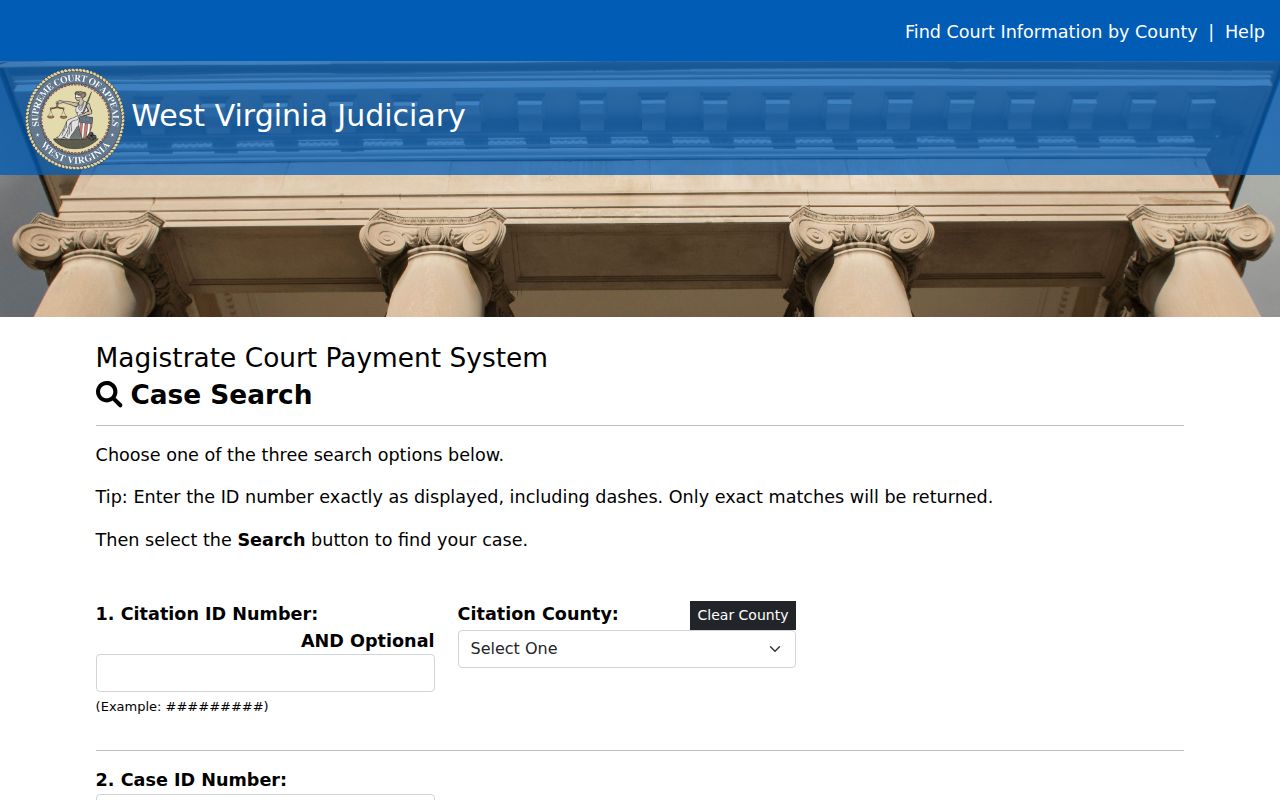
Note the case number, parties, filing date and disposition. Then match the property through its legal description and any later recorded deed.
Request a Greenbrier Deed Copy
Start a Greenbrier County deed request with the County Clerk's Online Deed Inquiry. The courthouse also has four public computers. When the online index comes up empty, call or visit the Clerk. Bring names. An approximate year, parcel ID, deed book and page, and the legal description all help staff pull the right land record. That detail steers them away from a same-name instrument. The Clerk's published page posts a copy schedule. It does not state an online image fee or certified-copy charge for every document type. The current Fees & Records page lists $1.50 for the first two copy pages. Each added page costs $1.00. Ask whether a plain copy will do or whether you need a certified version. Confirm the fee before ordering. The in-person counter handles records not online. No county-wide mail procedure for deed copies is stated. Contact the Clerk rather than assuming the method.
Recorded, not guaranteed. A Greenbrier deed index shows recorded instruments, not every possible claim or unrecorded interest. A title search and legal review are separate work.
Greenbrier’s Virginia-Era Books
Greenbrier County's land story starts before West Virginia. Virginia formed it in 1778. Its parent counties were Montgomery and Botetourt. A catalog lead points to deed books 1 through 5 covering 1780 to 1814, plus Will Book 1 spanning 1777 to 1833. Earlier deed references appear for 1750 to 1752, 1754, 1769, and 1783 to 1784. Confirm exact holdings and call numbers with the Clerk or the Historical Society. Catalog dates don't promise digitized volumes. Older instruments describe land with metes and bounds, waterways, roads, and adjoining owners rather than a street number. Search variant surnames and copy the whole description. The Greenbrier Historical Society archive holds courthouse papers, marriage bonds, family files, newspapers, and rare documents, and the page below describes how the collection supports house-history research.

Archive visits need an appointment. Give at least 24 hours' notice, ask staff about copy or scan access, and verify ownership in the deed books afterward.